Last Updated on November 27, 2025 by sashoy
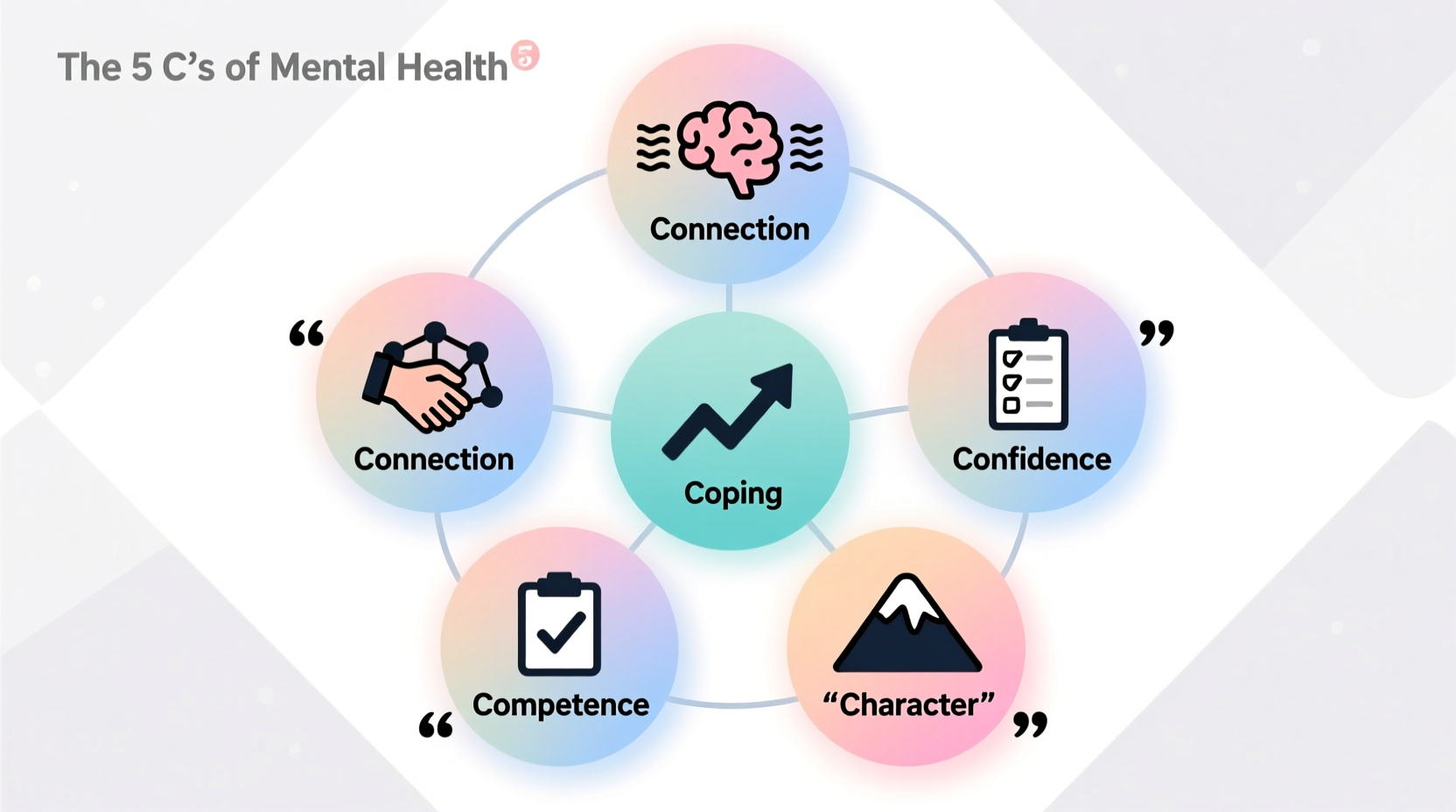
Mental health is not just the absence of illness—it’s the presence of strength, balance, and emotional resilience. In a fast-moving world where stress levels are high and expectations never seem to slow down, maintaining good mental health is essential for a fulfilling life. One powerful framework used by psychologists, educators, and wellness experts is known as the 5 C’s of mental health. These five core qualities—Connection, Coping, Confidence, Competence, and Character—work together to support emotional stability, healthy relationships, and personal growth.
Understanding the 5 C’s provides a clear path toward building stronger mental resilience. When nurtured, these qualities help you handle stress, form meaningful bonds, make constructive decisions, and handle life’s inevitable challenges with clarity and strength.
Connection: The Foundation of Emotional Stability
Human beings thrive on connection. It’s not just a desire—it’s a fundamental psychological need. Healthy relationships with family, friends, colleagues, and community provide emotional support, safety, and a sense of belonging. When people feel meaningfully connected to others, they experience less loneliness, less anxiety, and a greater sense of purpose.
Connection doesn’t require a large social circle; it requires genuine relationships. Even a small support system can have a profound impact on mental well-being. Strong connections also encourage open communication, making it easier to share feelings, ask for help, and navigate difficult moments without feeling isolated.
Coping: The Ability to Handle Stress and Change
Life is unpredictable. Stress, conflict, and unexpected challenges are part of being human. What truly matters is how you respond. Coping skills allow you to manage emotional ups and downs, stay grounded during difficult times, and recover more quickly after setbacks.
Effective coping strategies include self-reflection, deep breathing, journaling, physical activity, problem-solving, and sometimes seeking professional help. These skills don’t eliminate stress—they help you process it in healthier ways. People with strong coping abilities are more adaptable, calmer under pressure, and better equipped to maintain inner peace even when circumstances are tough.
Confidence: Believing in Yourself and Your Abilities
Confidence is the inner belief that you can handle whatever comes your way. It isn’t arrogance or perfection—it’s trust in your ability to face challenges, make decisions, and learn from experience.
Having confidence improves emotional resilience because it encourages you to take action instead of feeling stuck or powerless. When you believe in yourself, you take healthier risks, set boundaries, build stronger relationships, and bounce back faster when things go wrong. Confidence also boosts motivation and encourages positive thinking patterns, which makes everyday stressors more manageable.
Competence: The Skills to Navigate Life Successfully
Competence refers to the knowledge and abilities that allow you to function effectively in the world. It includes emotional competence (understanding your own feelings), social competence (communicating and interacting well), and practical competence (solving problems, staying organized, managing responsibilities).
When you feel competent, you feel capable. You trust yourself to make decisions, handle responsibilities, and overcome setbacks. Competence reduces anxiety because it replaces uncertainty with clear strategies and practiced skills. Every new skill you develop—whether emotional, social, or practical—adds another layer of confidence and stability to your mental health.
Character: Values That Guide Your Choices
Character shapes who you are and how you treat others. It includes qualities such as honesty, empathy, kindness, responsibility, and integrity. A strong sense of character creates alignment between your actions and values, which leads to deeper self-respect and healthier relationships.
People with strong character tend to have better emotional boundaries, make more thoughtful decisions, and maintain meaningful connections with others. It also plays a vital role in mental wellness because living in alignment with your values reduces inner conflict, shame, and regret. When your actions match your principles, you feel grounded and authentic.
Why the 5 C’s Work Together
Although each of the 5 C’s plays an individual role, their true power lies in how they support one another. Connection builds confidence. Confidence strengthens coping skills. Coping becomes easier when you feel competent. Character guides your decisions and relationships. The result is a balanced, resilient mindset capable of handling both the joy and the challenges of life.
Strengthening the 5 C’s is not a one-time task but a lifelong practice. With intentional effort, each quality can grow, evolve, and improve over time. The more you nurture them, the stronger your mental foundation becomes.
Conclusion: A Holistic Approach to Mental Wellness
Mental health is an ongoing journey, and the 5 C’s offer a clear, practical roadmap for cultivating emotional well-being. By nurturing connection, building coping skills, strengthening confidence, developing competence, and living with character, you create a resilient inner foundation that supports every area of life.
Small daily actions—reaching out to loved ones, practicing self-care, learning new skills, setting boundaries, and staying true to your values—can transform your emotional landscape. When these five qualities work together, they create a healthier, more grounded, and more empowered version of you.